


Before real estate, I spent more than six years managing gyms and coaching people toward their goals. So when you tell me you want room to train at home, I know what that really takes.
It's usually more than "a garage" or "an unfinished basement." And it's way easier to figure out before you buy than after. Plenty of people move in and then find out the ceiling is too low or the garage is too cold to use half the year.
Here's what I look at when a home gym is on your list.
MEASURE THE CEILING FIRST
This one surprises people the most. A room can feel roomy and still be too short to train in.
- Check the height of the rack you have or want, then add room for overhead presses and pull-ups
- Measure the lowest point, not the middle of the room. Ducts, beams and garage door tracks eat up space fast.
- Bring a tape measure to showings. It saves a lot of guessing later.
PLAN FOR THE SETUP YOU'LL GROW INTO
Most home gyms start small. Then a bench and some dumbbells turn into a rack, a bar and a stack of plates. Sound familiar?
- Picture your setup a year from now, not just today
- A full-length barbell needs more side-to-side room than you'd think
- Leave enough space to move around your equipment safely
GARAGE OR BASEMENT
Most home gyms end up in one of these two spots. Both have tradeoffs.
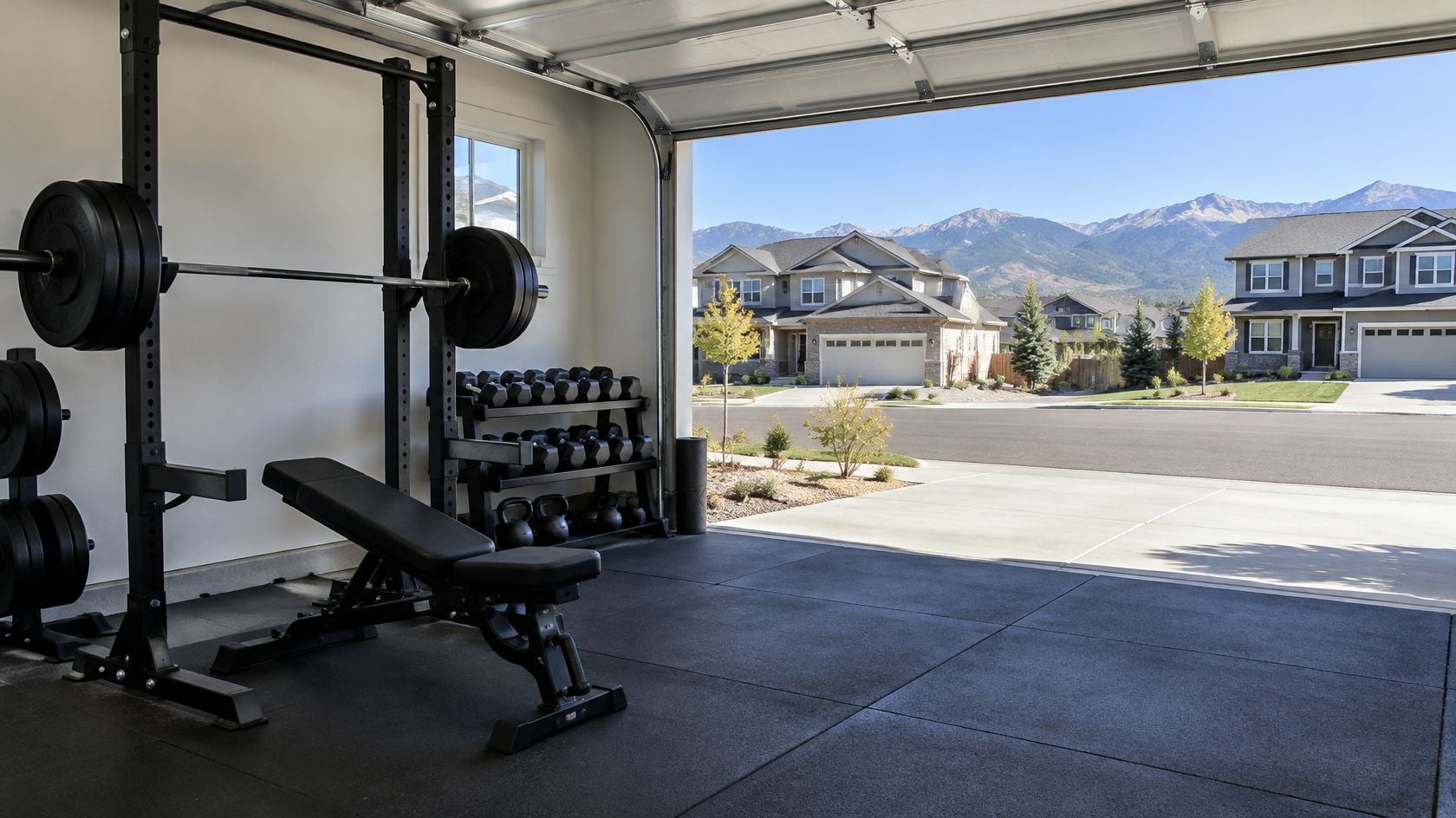
The garage is usually the easiest place to start.
- Concrete floors handle heavy equipment
- Getting equipment in and out is easy
- It gets cold in the winter, so check if the garage door is insulated and where a heater could go
- You might give up a parking spot, which matters more once the snow starts
The basement is steadier and quieter.
- The temperature stays more consistent year round
- Noise stays away from the rest of the house
- Heavy equipment is harder to get down there, so look at the stairs and doorways
- If it's unfinished, ask what's been done and whether any work was permitted
TEST FOR RADON
If your gym is going in the basement, don't skip this one.
About half of Colorado homes have radon above the EPA's recommended action level, according to the Colorado Department of Public Health and Environment (accessed September 2026). It gets in through gaps and cracks in basement walls and slabs.
- Ask your inspector about adding a radon test during your inspection period
- If levels come back high, you find out before closing instead of after
If you're spending an hour a day down there, it's worth knowing.
CHECK THE FLOOR
Concrete is the best case. Rubber stall mats go right on top and you're set.
- Carpet over a slab works if you're okay pulling it up
- Be careful with a gym on an upper floor or over a finished room. Dropping weights is a whole different story up there.
LOOK AT THE POWER AND AIRFLOW
Walk the space and count the outlets.
- Planning on a treadmill or other powered equipment? Check the manual. A lot of them call for a dedicated circuit.
- Adding a circuit is easier to plan for when you know about it going in
- Look for a window, a vent or a spot for a fan. Garages and basements get stuffy fast during a hard session.
READ THE HOA RULES
If the home has an HOA, check the rules before you get attached.
- Some HOAs have rules about parking and how garages can be used
- If the plan is to turn the garage into a gym and park in the driveway, read the covenants before you write an offer
- Train early? Ask about noise rules too.
THINK ABOUT WHAT'S NEARBY
Even with a great setup at home, most people still want options close by.
- A gym or rec center for the days you want more equipment
- Trails for weekend hikes and runs
- A park for a quick session outside
Where you train is part of your everyday routine. It's worth factoring into where you live.
THE SHORT VERSION
If a home gym matters to you, treat it like any other must-have.
- Measure the ceiling
- Think about winter
- Test for radon
- Check the HOA before you fall in love with a house
It's a lot easier to rule a house out at a showing than to find out after closing.
I still train most mornings before my day starts, and I help buyers around Lafayette, Erie, Broomfield, Thornton, Westminster, Frederick and Brighton.
Have a house in mind and wondering if the garage or basement will actually work for your setup? Send it my way! Tell me what equipment you have and I'll give you my honest take before you book a showing.
Nate Uribes
The Ignite Team at The Key Team Real Estate Group
Check out this article next